.svg)
When 'Vibe' Goes Wrong: A Developer's Guide to Fixing Unintended Emotional Responses in AI
You launched your AI tool. The logic is sound, the model is powerful, and the features work. But something’s wrong. Users sign up, poke around for a day, and then… they vanish. The feedback you get is frustratingly vague: "It just feels… off." "I don't know, it's a little creepy." "The vibe is weird."
Welcome to one of the most critical, yet least discussed, challenges for indie AI developers: your product has a 'soul problem'. This isn't about bugs or missing features; it's about the unintended emotional response your tool creates. This "vibe" is the invisible layer of user experience that determines whether someone feels empowered and understood, or rushed, condescended to, and untrusting.
Getting the vibe right isn't just a nice-to-have. It's the difference between a tool that users adopt into their daily workflow and one that gets abandoned after the first interaction. But how do you fix a problem you can't easily define?
You start with a framework.
Beyond Code: A Framework for Your AI's 'Soul'
The reason "bad vibes" are so hard to pin down is that they happen on multiple levels of human perception. Borrowing from the masters of emotional design, we can adapt a proven framework to understand exactly where our AI's personality is going off the rails. Think of it as three distinct layers of user experience: Visceral, Behavioral, and Reflective.
1. The Visceral Level: The Gut Reaction
This is the immediate, pre-conscious feeling a user gets in the first few seconds. It’s pure instinct. For AI tools, this often comes down to:
- Appearance: Does the UI use a calming, focused color palette, or is it a chaotic mess that induces anxiety? Does your chatbot's avatar look helpful and professional, or does it fall into the "uncanny valley," looking almost human but just wrong enough to be unsettling?
- First Interaction: Is the onboarding message warm and encouraging, or is it a cold, robotic command?
A visceral mismatch is when a tool designed for creative writing uses a harsh, industrial interface, or a data analysis tool has a playful, cartoonish avatar. The gut says, "Something isn't right here."
2. The Behavioral Level: The Experience of Using It
This layer is about the practical usability and performance of your AI. It’s where the user decides if the tool is a helpful partner or a frustrating obstacle. Key questions include:
- Pacing and Speed: Does your AI respond instantly, making the conversation feel inhumanly fast and rushed? Or does it take too long, making the user feel impatient?
- Language and Tone: Does your AI writing assistant use overly casual slang for a professional context? How does it handle ambiguous questions? Does it admit when it doesn't know something, or does it confidently invent false information (hallucinate)?
- Functionality: Does the tool do what it promises, easily and reliably?
A behavioral mismatch is an AI that uses friendly emojis but provides terse, unhelpful answers. The experience says, "This tool doesn't understand what I need."
3. The Reflective Level: The Long-Term Relationship
This is the highest level of emotional design, encompassing the user's conscious thoughts and feelings about the tool after they've used it. It’s about the story they tell themselves about your product.
- Trust and Control: Do they feel in control of the AI, or does the AI feel like a "black box" that's making decisions for them? Is the tool transparent about its limitations?
- Empowerment: Does the user feel smarter, more creative, or more productive after using your tool? Does it make them feel good about themselves?
- Overall Story: Does the tool become a trusted sidekick in their workflow? Do they recommend it to friends?
A reflective mismatch is when a tool is technically effective but leaves the user feeling manipulated or de-skilled. The long-term feeling is, "I don't trust this thing."
The Vibe Diagnosis Toolkit: How to Pinpoint What's Wrong
Understanding the framework is the first step. Now, let's get practical. Here’s how you can diagnose which level is causing your vibe problem.
Step 1: Listen to the Whispers (Analyzing User Feedback)
Vague feedback is a goldmine if you know how to read it. Translate what users say into what they feel:
- "It's creepy" or "It's weird" often points to a Visceral problem. Look at your avatar, your color scheme, or your AI’s word choice. It might be trying too hard to be human.
- "It's frustrating" or "It's annoying" is almost always a Behavioral issue. Your error messages are likely unhelpful, the workflow is confusing, or the AI's responses aren't meeting expectations.
- "I don't trust it" or "It feels manipulative" is a major Reflective red flag. This suggests a lack of transparency, unpredictable AI behavior, or a sense that the tool is hiding things.
Step 2: Spot the Common Culprits (A Gallery of Bad Vibes)
Many vibe problems stem from a few common, easily fixable design pitfalls. Do any of these sound familiar?
- The Uncanny Valley Chatbot: It uses a hyper-realistic avatar and tries to mimic human emotion with phrases like "I'd be happy to help you with that!" This often backfires, feeling disingenuous and unsettling.
- The "Computer Says No" Error: Your AI hits a snag and delivers a dead-end error message like
Error: Invalid_Input. This shatters trust and makes the user feel stupid. It's a behavioral failure that damages the reflective relationship. - The Overly-Familiar AI: Your productivity tool starts calling the user "buddy" or using excessive emojis. This tonal mismatch feels unprofessional and can undermine the tool's credibility.
- The Black Box Oracle: The AI gives an answer without showing its work or providing sources. The user has no idea why it came to that conclusion, eroding trust at the reflective level.
Step 3: Conduct a Self-Audit (Your Vibe Diagnosis Checklist)
Grab a coffee and ask yourself these honest questions about your AI tool:
- Visceral: If my UI were a room, would it be a calm library or a chaotic casino? Does my AI's avatar or icon inspire confidence or caution?
- Visceral: What is the very first sentence my AI says to a new user? Does it sound helpful or demanding?
- Behavioral: How fast are the AI's responses? Are they so fast they feel fake, or so slow they cause frustration?
- Behavioral: What happens when a user asks something completely outside its scope? Does it fail gracefully or spit out a confusing error?
- Behavioral: Read the last 10 responses your AI generated. Does the tone match the tool's purpose?
- Reflective: Can a user easily undo or ignore the AI's suggestions? Is user control a priority?
- Reflective: Am I transparent about the AI's limitations and potential for mistakes?
- Reflective: After a week of use, would someone feel like they have a new superpower, or would they feel replaced?
From Diagnosis to Delight: Strategies for a Vibe Shift
Once you've identified the problem area, you can make targeted changes to align your AI's vibe with your intent.
Crafting a Clear AI Persona
Before you write a single line of AI-generated text, define its personality. Is it a witty creative partner, a formal and precise analyst, or a patient and encouraging teacher? A simple persona document outlining its core traits, tone of voice, and what it shouldn't do can prevent tonal inconsistencies.
The Power of Words: Fixing Vibe with Microcopy
The small words matter—a lot. Error states, loading messages, and suggestions are all opportunities to build a better vibe.
Before (Bad Vibe):Error: Query failed. Please try again.(This is a classic "Computer Says No." It's cold, unhelpful, and blames the user.)
After (Good Vibe):"Hmm, I'm having a little trouble understanding that. Could you try rephrasing it? I work best with clear, simple prompts."(This response is humble, takes responsibility, and gently educates the user on how to succeed. It builds trust instead of frustration.)
Designing for Trust: Graceful Failure and Transparency
Trust is the currency of AI. The fastest way to build it is to handle failure with grace.
- Admit Imperfection: Add phrases like "I'm still learning, so it's a good idea to double-check this information."
- Cite Your Sources: If your AI is summarizing information, provide links to the original sources. This turns a "black box" into a transparent research assistant.
- Make It Reversible: Ensure users can easily edit, delete, or ignore AI-generated content. This reinforces that they are in control.
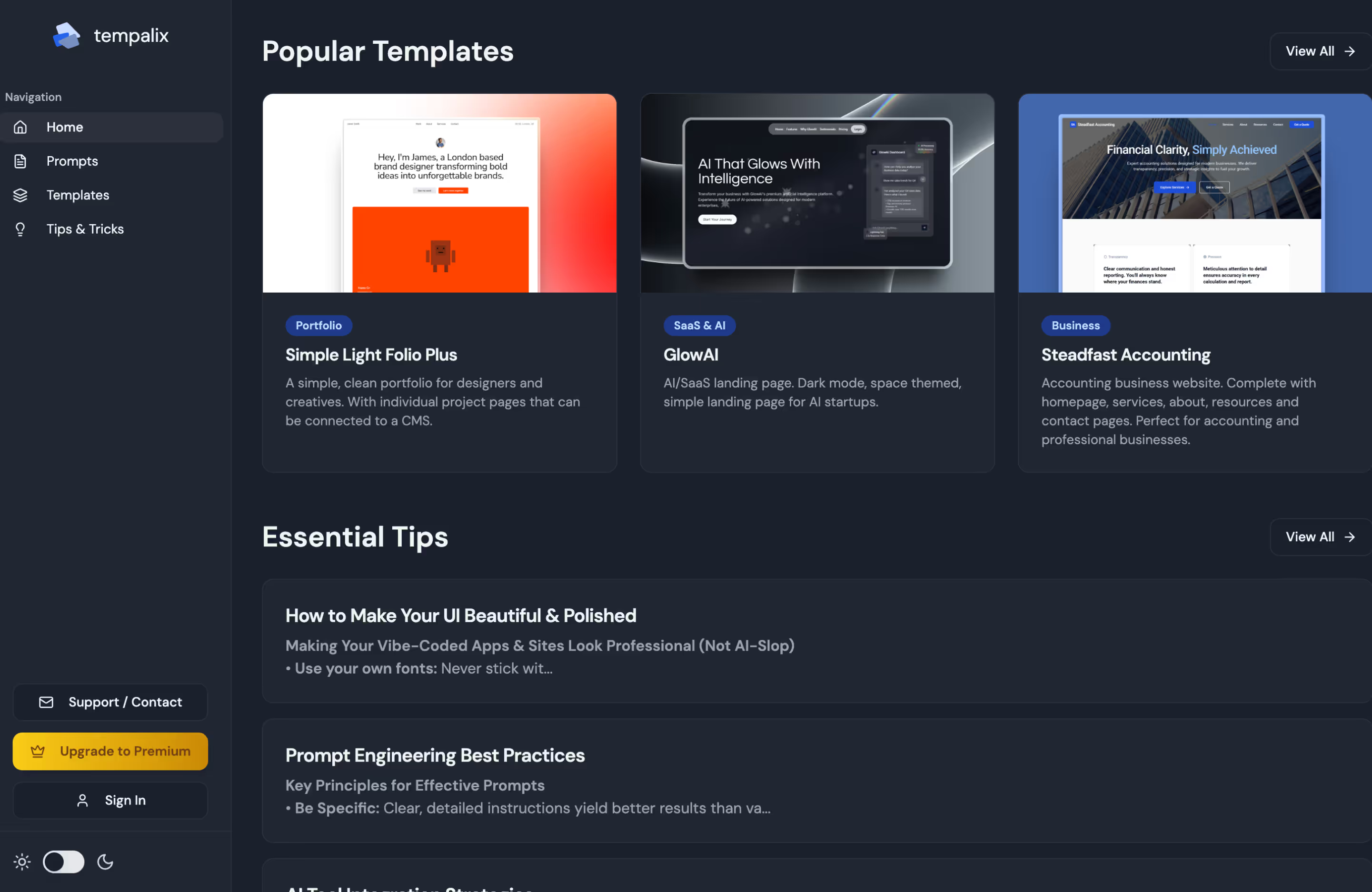
For more inspiration, you can always discover, remix, and draw inspiration from various projects to see how others are tackling these challenges.
Your 10-Point Vibe Check
Use this checklist as a final pass before you ship a new feature or update.
- Persona: Does this interaction align with our AI's defined personality?
- Clarity: Is the language simple, direct, and free of jargon?
- Tone: Does the tone match the user's emotional state in this moment (e.g., calm for success, reassuring for failure)?
- Humility: Does the AI admit when it might be wrong or doesn't know something?
- Control: Is it clear to the user that they are in charge?
- Transparency: Are the AI's limitations and capabilities clearly communicated?
- Pacing: Does the interaction feel natural, not rushed or sluggish?
- Visuals: Do the UI colors, icons, and avatars support the intended vibe?
- Error Handling: Are error messages helpful, humane, and actionable?
- Value: Does this interaction make the user feel more capable?
Frequently Asked Questions (FAQ)
What are the unintended consequences of AI?
Beyond the big headlines, a major unintended consequence is poor user experience caused by a "bad vibe." When an AI feels untrustworthy, annoying, or creepy, it erodes public trust in the technology as a whole. An AI that causes small-scale frustration feeds the larger narrative of AI being a negative force.
How do you fix a negative emotional response to an AI?
You fix it by treating the AI's "vibe" as a core design feature. Start by using a framework (like Visceral, Behavioral, Reflective) to diagnose the problem. Then, analyze user feedback, check for common pitfalls, and make targeted changes to your AI's persona, microcopy, and error handling to build trust and align the experience with user expectations.
Why do some AI chatbots feel creepy or robotic?
This usually happens for two reasons. First, the "uncanny valley": the AI tries too hard to be human with realistic avatars or overly emotional language, but small imperfections make the whole experience feel unsettling. Second, a lack of a clear persona makes it feel robotic. If an AI's tone is inconsistent or it defaults to cold, technical language, it breaks the illusion of a helpful partner and reminds the user they're just talking to code.
Your Next Step in Vibe Design
Your AI's "soul" isn't an accident; it's a product of thousands of small design decisions. By moving beyond just the code and focusing on the emotional journey of your users, you can turn a tool that feels "off" into one that feels indispensable.
The best way to master this is to see it in action. To continue your journey, explore a curated collection of vibe-coded projects and see how different developers are creating AI tools with a soul that truly connects with users.