.svg)
The Vibe-Coder's Guide: Choosing a No-Code Stack for Standout Frontends and Workflows
You have a vision. It’s more than just an app idea—it’s a feeling, an aesthetic, a vibe. But you’re caught in a frustrating middle ground. On one side, you have template-driven no-code builders that feel restrictive, forcing your unique vision into a generic box. On the other, the steep learning curve of traditional coding feels like a barrier to getting started quickly.
This is the classic dilemma for the modern creator, the "vibe-coder." You care as much about the aesthetic polish and the user experience as you do about the underlying functionality. The good news is, you don’t have to compromise.
The solution isn’t to find a single, perfect all-in-one tool. It’s to build a modern stack—a curated set of best-in-class no-code and low-code platforms that work in harmony. This modular approach gives you the creative freedom of a designer, the automation power of an engineer, and the speed of a no-code builder.
This guide is your framework for choosing that stack. We’ll move beyond the surface-level listicles and dive into the strategic decisions that empower you to build something truly unique, scalable, and vibe-aligned.
Why a "Stack" Beats an All-in-One Platform
Most online guides pit no-code platforms against each other in a zero-sum game. But the most sophisticated creators know the secret: you don't have to choose just one. Building a stack means picking the right tool for each job: one for the frontend, one for automation, and one for your data.
Think of it like building a custom audio system. You could buy an all-in-one boombox, and it would play music. But if you’re an audiophile, you’d never do that. You’d select the best turntable, the best amplifier, and the best speakers, knowing that each specialized component contributes to a far superior result.
This is the stack methodology. It directly addresses the two biggest hidden fears that most builders face:
- Losing Creative Control: You’re not locked into the design limitations of a single platform's UI builder. You can choose a tool specifically for its visual power.
- Hitting a Scalability Wall: By separating your frontend, logic, and data, you can swap out or upgrade individual components as your project grows without having to rebuild everything from scratch. This is how you reduce risk and build for the future.
Part 1: The Frontend — Where Your Vibe Comes to Life
The frontend is where your brand’s personality shines. It’s the visual handshake with your user. For vibe-coders, this is the most critical layer. While many tools can build a functional UI, only a few provide the granular control needed to create a signature experience.
We evaluate frontend platforms on three core criteria:
- Design Freedom: How much control do you have over every pixel, interaction, and animation?
- Integration Ease: How easily can it connect to workflow tools and external data sources?
- Vibe Potential: Can it build something that feels truly custom and breaks the mold?
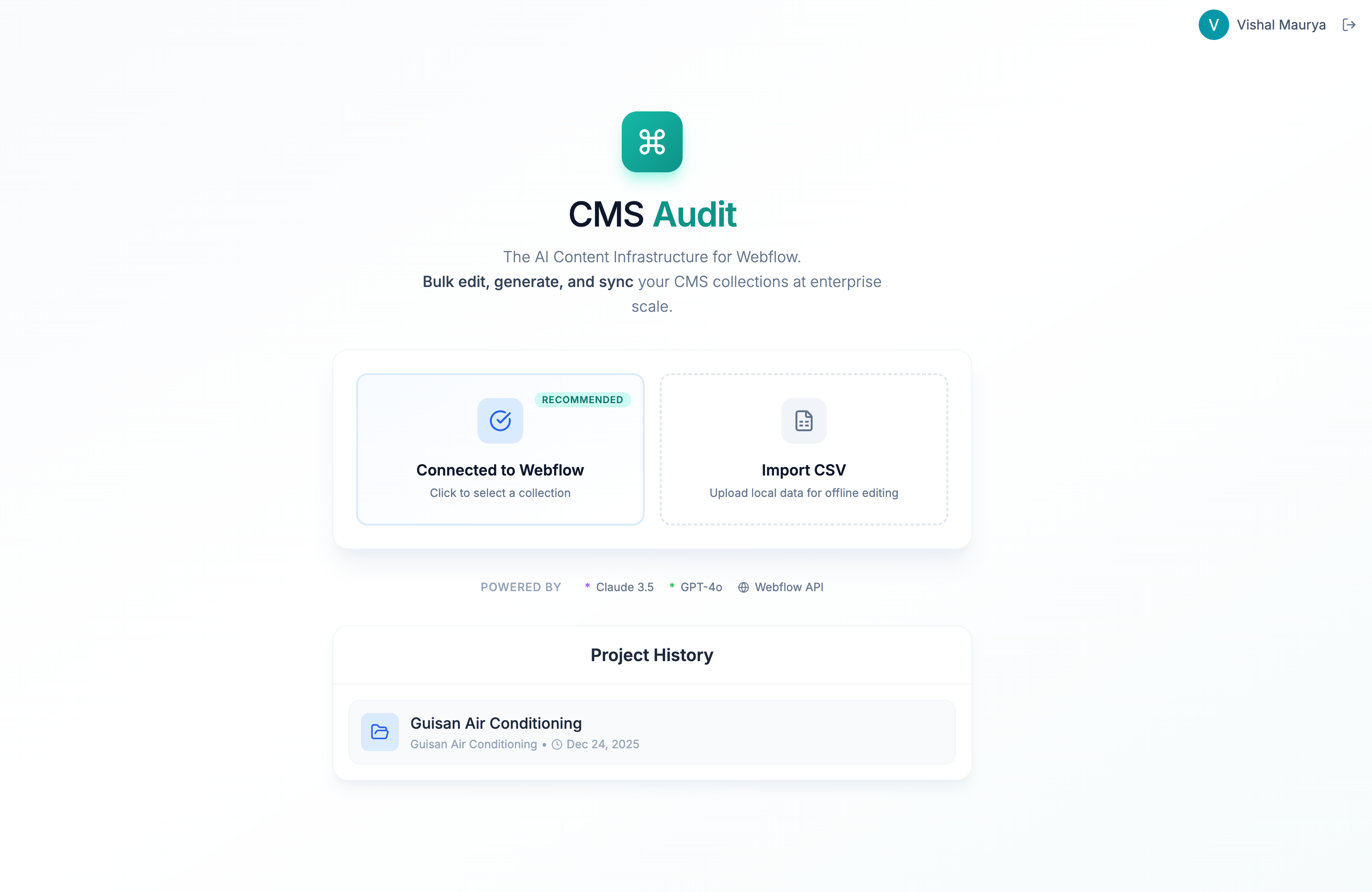
Webflow: For Unparalleled Visual Control
Webflow is the undisputed leader for creators who want to build visually stunning, production-ready websites without writing code. It offers near-limitless design freedom, essentially giving you the power of HTML and CSS through a visual interface. Its rich interaction engine allows you to create fluid animations and transitions that are central to a product's vibe.
- Best for: Polished marketing sites, interactive landing pages, and web applications where the brand experience is paramount.
- Heads-up: While powerful for frontends, its built-in logic and database (CMS) are best for content-driven sites. For complex app logic, you'll want to pair it with a more robust backend.
Bubble: For Complex Logic and Full-Stack Power
Bubble is a workhorse. It’s designed for building full-stack web applications with complex workflows, user accounts, and database operations all in one place. While its design interface isn't as fluid as Webflow's, its logical power is immense. If your app's core value is in what it does rather than just how it looks, Bubble is a top contender.
- Best for: Social networks, marketplaces, internal dashboards, and SaaS products with heavy user interaction and data manipulation.
- Heads-up: As our research into the competitive landscape shows, Bubble’s power can be intimidating for beginners. There's a steeper learning curve to mastering its expression language and database architecture.
Framer: For Interactive Prototypes Turned Real Products
Framer has emerged as a serious challenger, especially for those coming from a design background (it imports directly from Figma). It excels at creating high-fidelity, interactive prototypes and turning them into live websites. Its focus on interaction and out-of-the-box animated components makes it a fast way to build a site that feels alive.
- Best for: Designers who want a seamless path from design tool to live site, and projects that require sophisticated micro-interactions.
- Heads-up: It's a newer player in the no-code space, so its ecosystem and backend capabilities are still evolving compared to Bubble or Webflow.
Part 2: The Workflow Engine — The Connective Tissue of Your App
If the frontend is the face of your app, the workflow engine is its central nervous system. This is where you automate processes, connect to third-party services, and—most importantly for modern apps—integrate AI capabilities. Competitor content often misses this, focusing only on the visual builder, but this is where the magic truly happens.
A powerful automation platform allows you to connect your beautiful frontend to any service with an API, from sending an email to running complex AI models.
Make.com (formerly Integromat): For Visualizing Complex Scenarios
Make is built for visual thinkers. It allows you to map out complex, multi-step workflows in a way that’s incredibly intuitive. You can see exactly how data flows from one module to another, add routers for conditional logic, and handle errors with precision. This visual approach is perfect for debugging and understanding sophisticated automations, like chaining multiple AI API calls together.
- Best for: Complex, multi-step automations, API integrations, and anyone who wants to visually map out their app's logic.
Zapier: For Simplicity and Vast App Support
Zapier is the most well-known automation tool for a reason: it's incredibly easy to use and connects with over 5,000 apps. If you need to quickly link a common tool (like a Google Sheet to a Mailchimp list), Zapier is often the fastest way to do it. Its linear, step-by-step "Zap" builder is straightforward for simple tasks.
- Best for: Simple, two- or three-step automations and connecting to the widest possible range of popular applications.
For vibe-coders, these tools are essential for bringing AI into your stack. You can easily build a workflow that takes user input from a Webflow form, sends it to the OpenAI API for processing, and then returns the result to your user or saves it to a database. This is how you can [discover how to connect OpenAI to your no-code app] without writing a single line of server code.
Part 3: The Data & Logic Layer — Building a Scalable Foundation
Every app needs a place to store and manage data. Your choice of backend will determine how well your application can scale and handle complexity. The stack approach gives you the flexibility to start simple and graduate to more powerful solutions as needed.
Airtable & Google Sheets: For Simplicity and Flexibility
For many projects, a full-fledged database is overkill. Airtable acts as a super-powered spreadsheet with database-like features. It's incredibly user-friendly and visual, making it a perfect "backend" for MVPs, internal tools, and projects where you need to easily view and manipulate data.
Xano & Supabase: For When You Need a True Backend-as-a-Service
When you need user authentication, scalable database performance, and the ability to build your own robust APIs, it’s time to level up to a true Backend-as-a-Service (BaaS).
- Xano is a powerful no-code backend platform that gives you a scalable database, ready-to-use APIs, and advanced business logic without writing code.
- Supabase is a popular low-code, open-source alternative to Firebase. It provides a database, authentication, and auto-generated APIs, but offers the flexibility to add custom code when you need more control.
Choosing one of these addresses the hidden concern of scalability, ensuring your app has a solid foundation that can grow with your user base.
Putting It All Together: A Vibe-Coded Stack in Action
Let's make this tangible. Imagine you want to build "Mindloom," a mood and emotion monitoring tool we feature on Vibe Coding Inspiration.
Here's how you could build it with a no-code stack:
- The Frontend (Webflow): You design a calming, minimalist interface in Webflow. A single text field invites the user to describe their day. The animations are subtle and fluid, reinforcing the app's serene vibe.
- The Workflow Engine (Make.com): When a user submits their entry, Make.com triggers. It sends the text to OpenAI's API with a prompt to analyze the sentiment and identify key emotions.
- The Data Layer (Airtable): Make.com takes the original text and the AI-generated analysis (e.g., "Sentiment: Positive," "Emotions: Joy, Optimism") and saves it all in a new record in an Airtable base, timestamped and linked to that user.
- The Presentation: The user is then redirected to a dashboard page in Webflow where the data from Airtable is displayed back to them in a beautiful, visual format.
This modular stack is powerful. If you later decide you want a more robust data backend, you can swap Airtable for Xano without ever touching your beautiful Webflow frontend. This is the flexibility and power that vibe-coders need.
Frequently Asked Questions for Vibe-Coders
Won't using multiple tools be more expensive than an all-in-one platform?
Not necessarily. With a stack, you only pay for what you need. Many of these tools have generous free tiers that are perfect for building and testing your initial product. This allows you to build a more powerful, customized solution, often for a similar or even lower cost than a high-tier plan on a single, monolithic platform.
How do I handle user accounts and authentication across different tools?
This is a common challenge that has great solutions. Third-party tools like Memberstack, Outseta, or Stytch are designed to sit on top of your frontend (like Webflow) and manage user sign-ups, logins, and gated content. They then integrate with your backend tools to ensure a seamless user experience.
Is this approach secure?
Yes, provided you follow best practices. Each tool in your stack is a specialized company responsible for its own security. Your job is to manage API keys securely (using environment variables or your workflow tool's built-in security features) and ensure you are handling user data responsibly.
At what point should I consider using custom code?
The beauty of a low-code stack is that you can inject custom code precisely where it's needed without derailing your entire process. A good rule of thumb: when you find yourself trying to trick a no-code tool into doing something it wasn't designed for, and the workarounds become more complex than the solution itself, it's time to consider a small custom code component (e.g., a Javascript snippet in Webflow or a serverless function that connects to your workflow).
Your Stack, Your Vibe
You no longer have to choose between creative expression and technical power. By adopting a modular stack approach, you can select the perfect tools to bring your unique vision to life without compromise. You can build a frontend with a distinct vibe, power it with intelligent automations, and build it on a foundation that’s ready to scale.
Ready to see what’s possible? Dive in and [explore our gallery of vibe-coded projects] to get inspired by what others in the community are building with these powerful stacks.