.svg)
Beyond the Pixels: A Guide to Vibe-Coded Design for Neurodivergent Accessibility
Have you ever opened a “beautifully designed” app, only to feel instantly overwhelmed? The clean lines and minimalist aesthetic are there, but a storm of notifications, subtle but insistent animations, and unexpected sounds leaves you feeling flustered and anxious.
This isn’t a personal failing; it’s a design one. Every digital interface has an unspoken energy—a “vibe.” For neurodivergent individuals, who may process sensory information differently, that vibe can be the difference between a tool that empowers and one that overwhelms.
Traditional accessibility often focuses on checklists for screen readers or color contrast ratios. While essential, these miss a crucial element: the sensory experience. This is where Vibe-Coded Design comes in. It’s a design philosophy that moves beyond rules and into rhythm, focusing on intentionally orchestrating the sensory output of an interface to create a calm, predictable, and supportive environment.
What is Vibe-Coded Design? A Sensory-First Approach
Think of it like this: a traditional architect designs a building’s structure, but an interior designer crafts its feel—the lighting, the acoustics, the flow. Vibe-Coding is the interior design of the digital world.
It’s a methodology built on three core pillars designed to support cognitive and sensory well-being.
The Three Pillars of Vibe-Coded Design
1. Sensory Input Management: This is about controlling the amount and intensity of visual and auditory stimuli. Instead of a firehose of information, you create a gentle stream. This means making deliberate choices about color, motion, and sound to avoid overwhelming the user’s sensory processing capacity.
2. Cognitive Load Reduction: The human brain has a finite amount of working memory. Neurodivergent individuals, particularly those with ADHD or executive function challenges, can find this mental bandwidth taxed more easily. This pillar focuses on making interfaces so clear and intuitive that users don’t have to think about how to use them.
3. Predictable Interactions: Anxiety often stems from uncertainty. When an interface behaves consistently, it creates a sense of safety and trust. This pillar is about establishing a reliable rhythm—where buttons always look and act the same, and feedback is clear and immediate, without jarring surprises.
By focusing on these three pillars, we can build applications that feel less like a demanding taskmaster and more like a supportive partner. The goal is to create a digital space where users can feel focused, calm, and in control.
The Vibe-Coding Toolkit: From Theory to Practice
So, how do you actually do it? Let’s move beyond abstract principles and look at concrete UI patterns. Many well-intentioned designs inadvertently create sensory chaos. The key is intentionality.
Visuals: Crafting a "Sensory Palette"
The visual vibe is the most immediate impression an app makes. It’s not just about aesthetics; it’s about creating a foundation of calm.
- Color: Avoid high-contrast, vibrating color combinations. Opt for muted, earthy tones or provide a "low-sensory" theme. According to research on sensory processing, overly bright and saturated colors can be perceived as glaring and uncomfortable.
- Typography: Prioritize legibility above all else. Use fonts with clear, distinct letterforms (sans-serifs are often a good start), generous letter spacing, and a line height of at least 1.5x the font size to improve readability, a key consideration for users with dyslexia.
- Motion & Animation: Motion can be a powerful tool for guiding attention, but it can also be a profound distraction.
- Bad Vibe: Autoplaying videos, parallax scrolling that shifts the background unexpectedly, or bouncy, elastic animations that demand attention.
- Good Vibe: Purposeful, subtle transitions that indicate a change of state. Animations should be brief and have a clear start and end. Most importantly, provide an option to reduce or disable motion entirely.
Sound: From Distraction to Direction
Unsolicited sound is one of the most common sensory triggers. Vibe-coded sound design is about using audio as a helpful, non-intrusive cue, not an alarm bell.
- Avoid: Sounds that play automatically on page load or notifications with high-pitched, urgent tones.
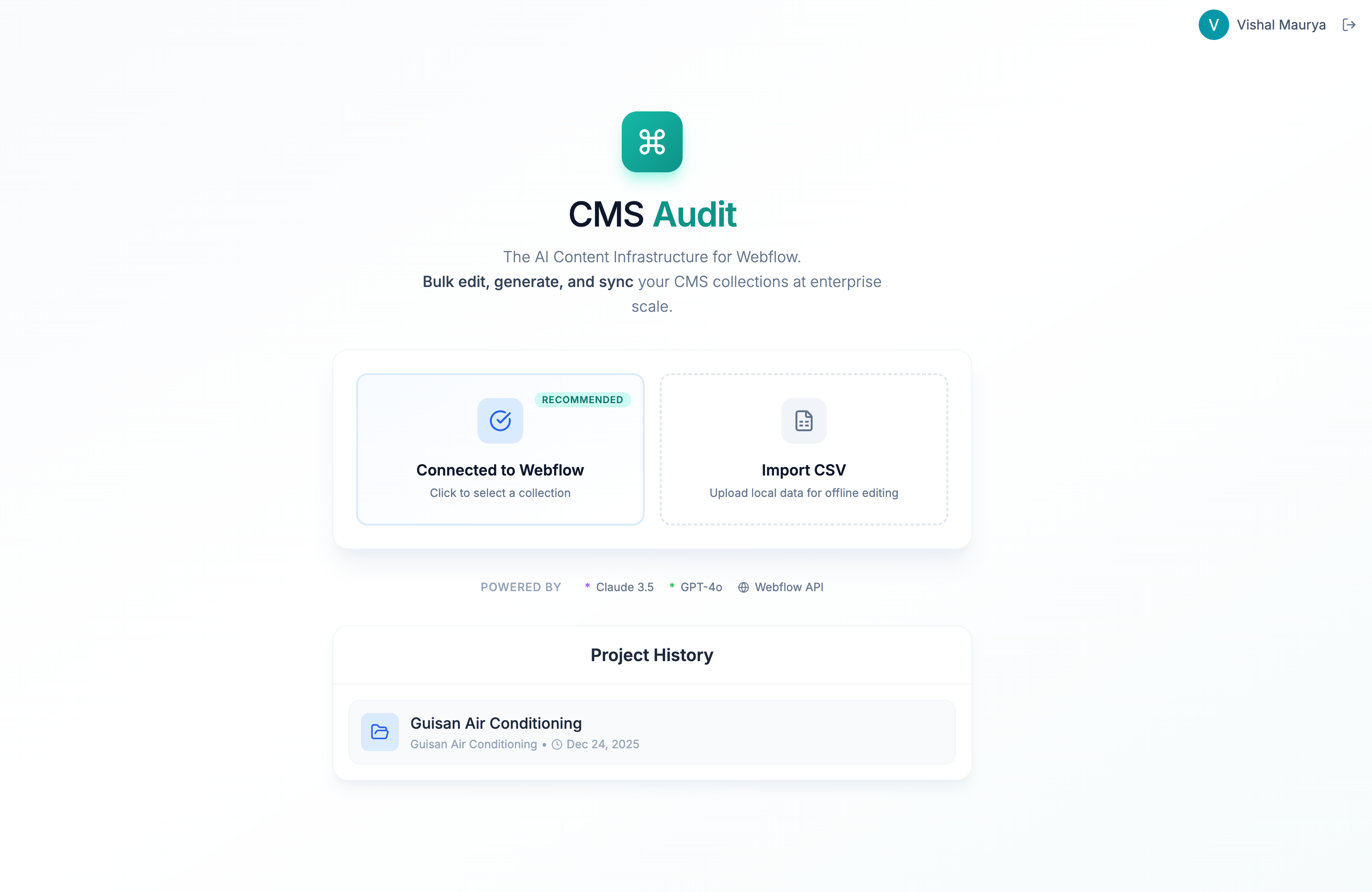
- Embrace: Soft, low-frequency tones to confirm an action (like sending a message). Sound should be user-initiated and provide positive feedback. Projects like the Mighty Drums web machine show how sound can be engaging and central to an experience without being overwhelming, because the user is in complete control.
Interaction: Building "Cognitive Anchors"
Cognitive anchors are consistent, reliable elements in a UI that users can depend on. They reduce the mental effort needed to navigate and build a foundation of trust.
- Consistency is Key: A button for "Save" should look and be in the same place on every screen. Navigation menus shouldn’t disappear or reorder themselves.
- Clear Feedback: When a user clicks a button, something should happen immediately. This could be a subtle color change or a simple "Saved" message. This removes the anxiety of "Did that work?"
- Forgiving Design: Allow for an easy "undo." Providing an escape hatch for mistakes reduces the cognitive load of worrying about every click.
Putting the Framework to Work: Mini Case Studies
Let's see how these principles apply to creating supportive experiences for specific neurodivergent needs.
Designing for ADHD: Supporting Executive Function
For users with ADHD, managing attention and reducing distractions are paramount. The goal is to create a clear path to completion.
- Sensory Input: Minimize all non-essential UI elements. A clean interface with a single, clear call-to-action per screen helps maintain focus.
- Cognitive Load: Break down complex tasks into smaller, manageable steps. Instead of one long form, use a multi-step process with a progress bar.
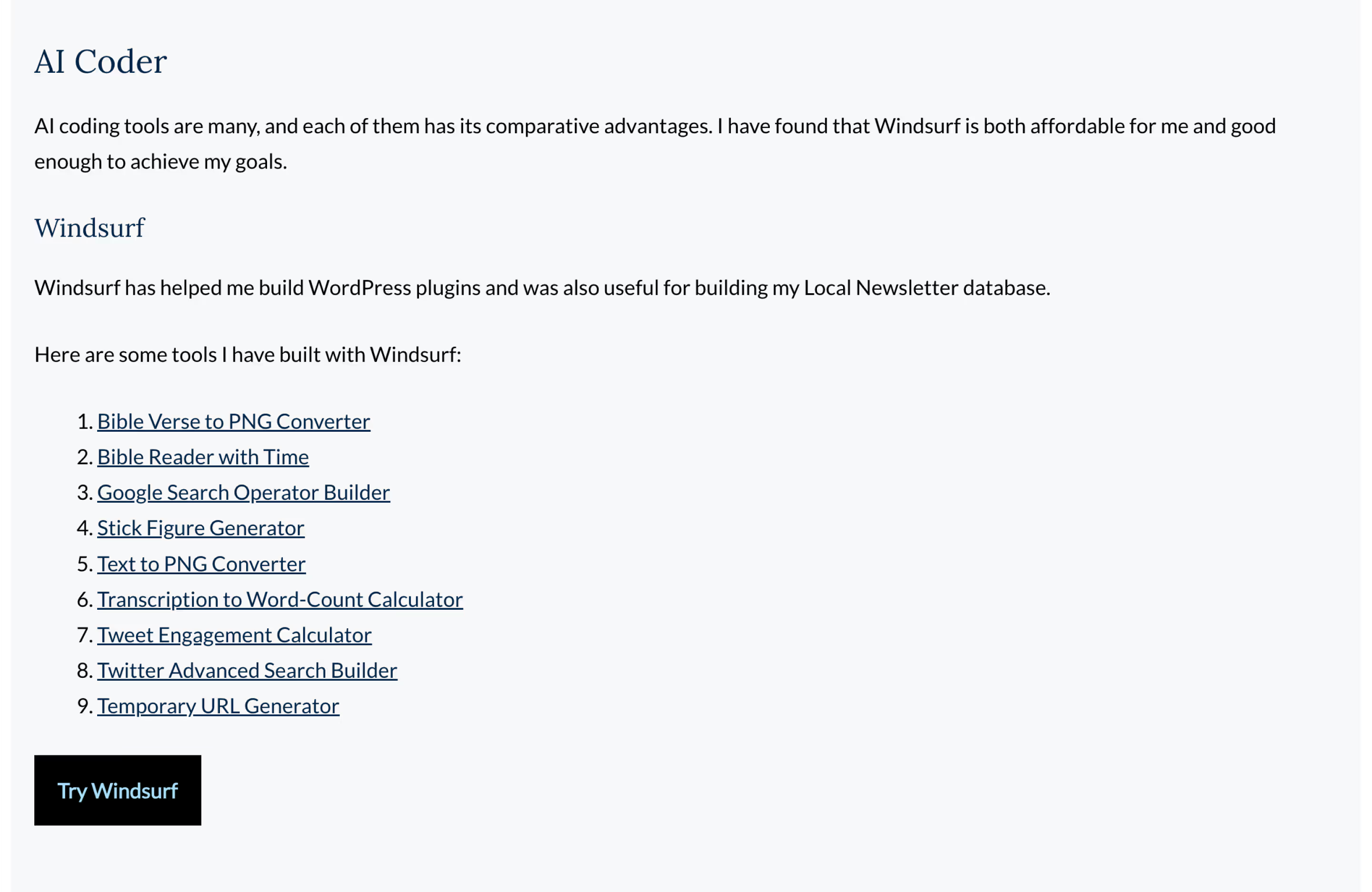
- Predictability: Use clear headings and lists to structure information. This makes content scannable and easier to process. AI-assisted writing tools often use these principles to create a focused environment for creativity.
Designing for Autism: Prioritizing Predictability
For many autistic individuals, sensory sensitivity and a need for routine are key considerations. A predictable, customizable environment can create a feeling of safety.
- Sensory Input: Offer high levels of customization. Allow users to choose their own color themes, font sizes, and turn off animations.
- Cognitive Load: Use clear, literal language. Avoid idioms, sarcasm, or metaphors that could be misinterpreted. Icons should always be paired with text labels.
- Predictability: Never change the layout or core navigation without warning. Any changes should be opt-in. A simple tool like ttyl for sending future messages excels by offering a straightforward, unchanging interface that does one thing reliably.
Frequently Asked Questions (FAQ)
What is neuro-inclusive design, really?
It’s the practice of designing products and experiences that are accessible and enjoyable for people with diverse neurological makeups. It recognizes that there's no "average" brain and that everyone has different ways of thinking, learning, and processing information. Vibe-coding is a practical framework for achieving this.
Why does this matter for my product or business?
Beyond the ethical imperative to create inclusive products, it’s good for business. Around 15-20% of the population is estimated to be neurodivergent. By creating an interface that is calming, clear, and easy to use, you're not just serving this community—you're creating a better experience for everyone. A less stressful experience leads to higher engagement and user satisfaction.
How can I start reducing cognitive load in my UI right now?
Start with an audit. Look at your busiest screen and ask:
- What is the one primary action I want the user to take here?
- What elements can I remove or hide that don't directly support that action?
- Is the language clear and direct?Clarity and focus are your most powerful tools.
How do I test my designs with neurodivergent users?
Inclusively and ethically. Partner with organizations that advocate for neurodivergent individuals. When conducting tests, create a low-stress environment, provide questions in advance, be flexible with your methods, and compensate participants fairly for their time and expertise. Their lived experience is an invaluable part of the design process.
The Future is Vibe-Coded
Creating truly accessible digital spaces requires us to move beyond checking boxes and start designing with empathy for the user's inner world. Vibe-Coding offers a new language and a practical toolkit to do just that.
By considering the sensory and cognitive impact of every color, sound, and interaction, we can build products that don't just work, but feel good to use. We can create environments that empower, support, and welcome every kind of mind.
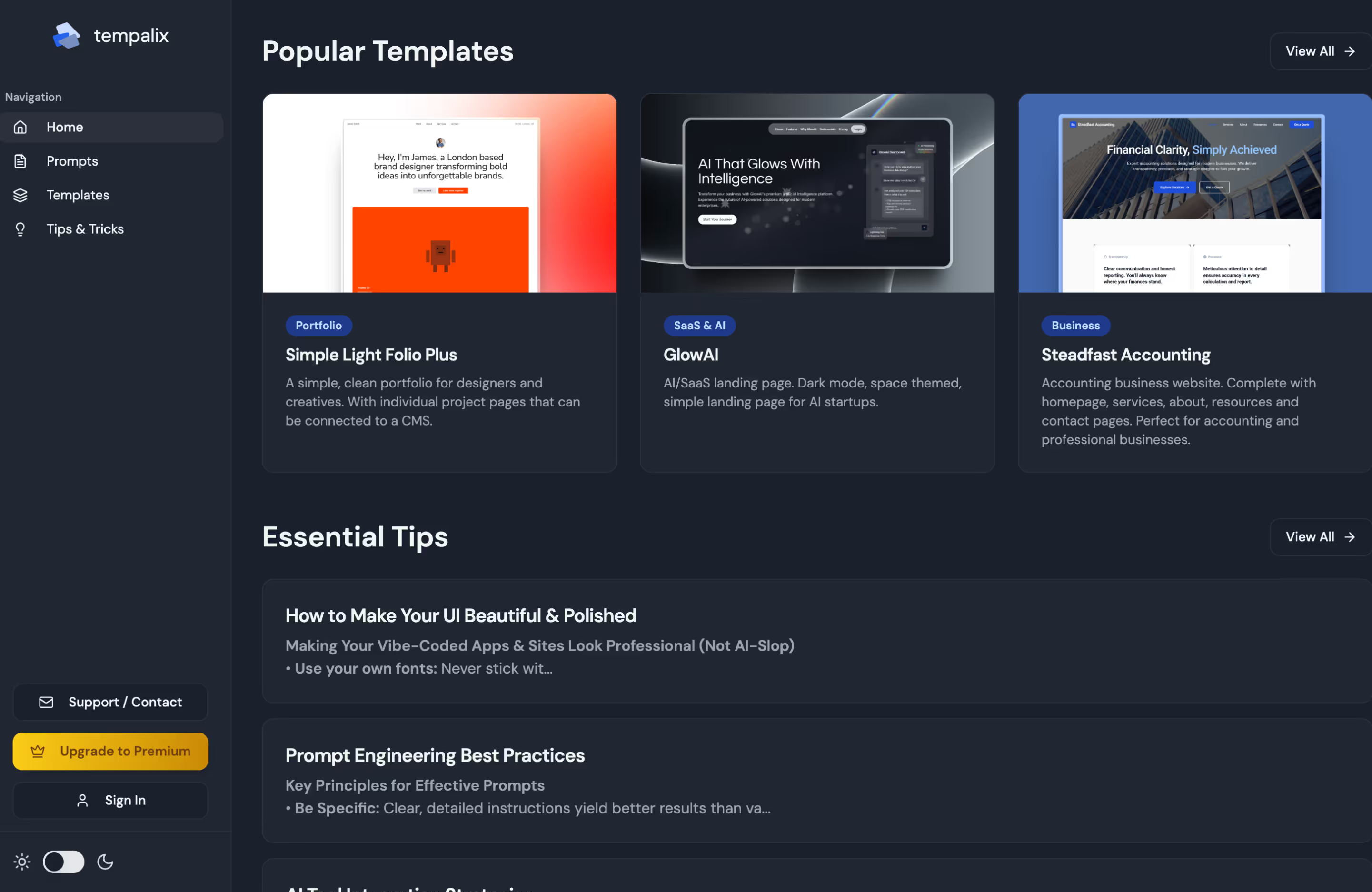
Ready to see what this looks like in the real world? Explore our curated gallery of inspirational, vibe-coded products to see how developers are putting these principles into practice.